China → named Lagos gateway
Apapa / Tin Can / Lekki
Compare the carrier’s available discharge port and terminal, destination charges and onward road leg for the same cargo.
CHINA → NIGERIA
A useful shipping plan starts with the goods and ends at an agreed handover point. Match each supplier’s cargo-ready date with the Nigerian importer, receiving address and unloading arrangements before comparing freight prices.
DDNZ coordinates the China sourcing and export handoff. Freight execution is handled by Heaven Born within the confirmed shipment scope. Start with your cargo list; the proposed route, available services and included charges need to be confirmed for that shipment.
Request a Nigeria shipment review ↗Compare the ranges for the route shown, then confirm the departure date and handover point for your shipment.
| Mode & route | Planning range | What to compare | Ask about this option |
|---|---|---|---|
| Ocean FCLChina → Apapa / Tin Can | 35–45 days | Ocean-leg range from existing records; collection, clearance and inland delivery are separate. | Ask about this option · Ocean FCL ↗ |
| Ocean LCLChina → Apapa / Tin Can | 35–50 days | LCL route reference; cutoff, consolidation and cargo release affect the full receiving timeline. | Ask about this option · Ocean LCL ↗ |
| Air freightChina → LOS | 5–8 days | Air-route reference; confirm connections, airport handling, clearance and final-delivery scope. | Ask about this option · Air freight ↗ |
Allow for supplier readiness, collection, waiting for departure, clearance and final delivery according to the clock shown. A port or station arrival is not delivery to the receiving address.
FCL record ranges summarise populated Q4 2026 transit-day fields across different origins and services; they are not averages. Other ranges are published route references or existing regional planning ranges, not confirmed HB departures or delivery guarantees.
ROUTES & TRANSIT TIME
“Lagos” alone does not identify the terminal or include delivery to a market.
Apapa / Tin Can / Lekki
Compare the carrier’s available discharge port and terminal, destination charges and onward road leg for the same cargo.
Consolidated cargo
Confirm the unpacking location, release documents, storage terms and collection contact. Warehouse pickup and market delivery are different scopes.
Air quotation
Price urgent cartons separately from bulky stock. Confirm chargeable weight, battery acceptance, airport release and last-mile delivery.
Compare total cost to the same handover point. Transit, clearance and delivery dates are confirmed separately.
For Alaba, Computer Village or Ladipo, give the actual receiving address, contact and vehicle access. For Abuja or another inland city, request a separate road leg.
List suppliers and ready dates; separate phone accessories, powered electronics and vehicle parts by packing, weights and condition. Agree unloading and container return responsibilities.
Lagos site record: unloading and warehouse intake. Match package counts and visible condition to the receiving list.
Silent footage · English context captionsPlanning example: cartons from several suppliers for a Lagos buyer
Suppose a buyer is combining non-powered phone cases and display accessories from different suppliers. One supplier is ready now, another later. The first decision is whether waiting for a combined shipment is better than sending separate batches.
Make one row per product and supplier: exact description, material, quantity, carton count, packed dimensions, gross weight and ready date. State explicitly whether any accessories include a battery, liquid or powered component. A broad label such as “accessories” is not enough to review the goods.
Agree what happens if cartons arrive short, damaged or differently labelled. Repacking can change the dimensions and weight, so use the released packing list for the freight comparison. Compare FCL and LCL on the same cargo data, including consolidation and destination charges.
NIGERIA · CERAMIC TILE CASE
A customer shipping ceramic tiles to Nigeria initially expected the same arrangements as a Southeast Asia shipment. The review focused on heavy-cargo charging, certification and protective packing.
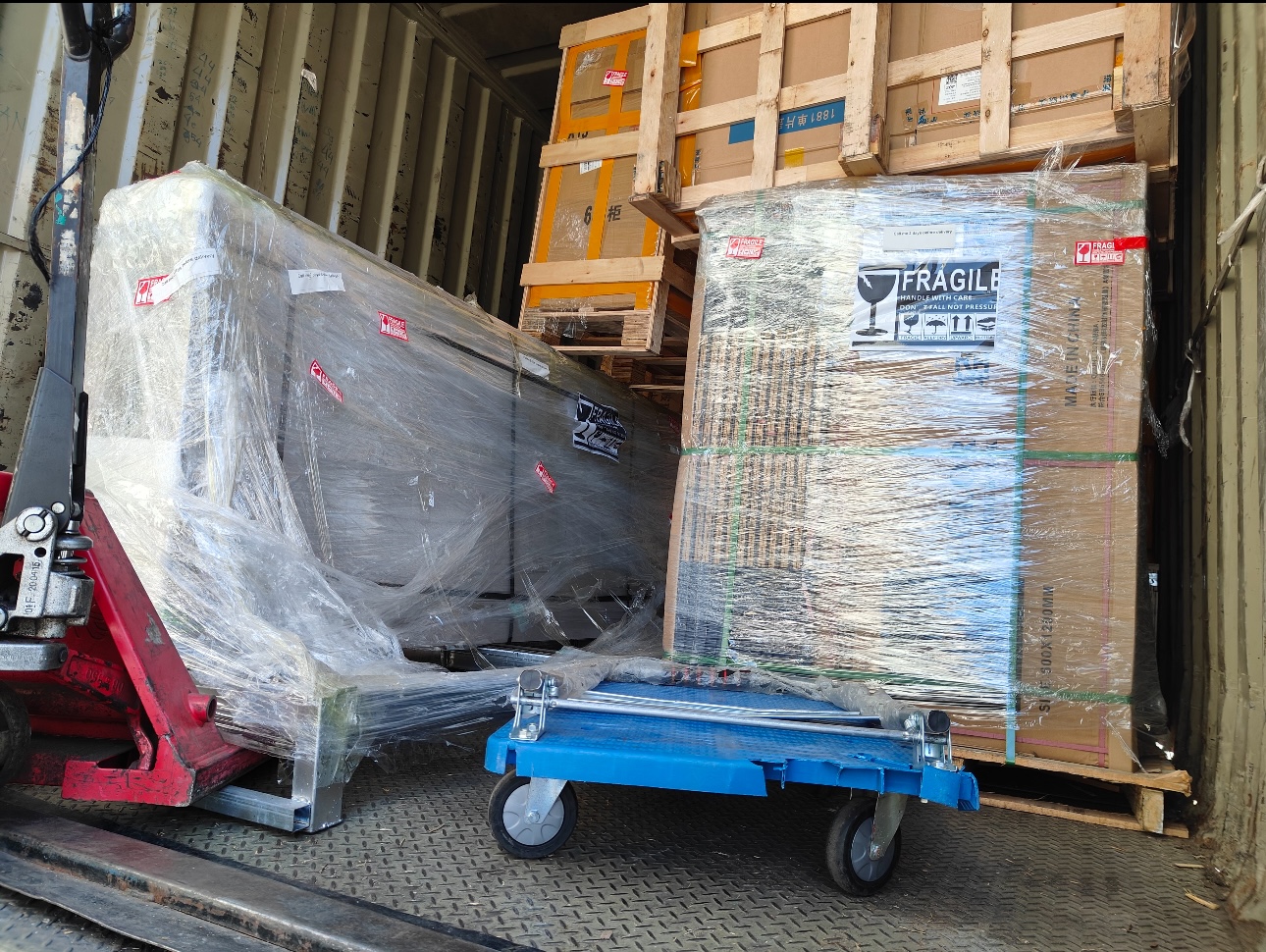
Wrapped cargo, straps, protective frames and fragile markings. Agree pallet or crate construction and handling requirements before collection.
View full image ↗This shipment: 4,719 kg · 3.5 CBM. The quoted heavy-cargo conversion was 500 kg per chargeable unit.
4,719 ÷ 500 = 9.438 ≈ 9.44 units
That is about 2.70 times the volume-only quantity of 3.5. This is the calculation for this quotation, not a universal sea-freight tariff. Confirm the conversion, rounding, minimums and local charges in writing.
Check the tile specification and HS code with the importer and certification provider. For regulated goods, prepare the applicable testing and Product Certificate (PC), then the shipment’s SONCAP Certificate (SC). Align importer details across certification and shipping documents.
SON: pre-shipment certification guidance ↗Review pallets or crates, corner and edge protection, wrapping and strapping. Confirm lifting access, stacking restrictions and the unloading plan. Photograph the finished packing before dispatch.
Lagos receiving
A port arrival, warehouse collection and delivery to a buyer’s address are different handovers. Give the exact address, receiving contact, opening hours and unloading method. State whether the buyer will collect or wants a delivery quotation.
Onitsha, Kano or another inland city
Add the inland leg as a separate scope. Identify who arranges release, collection, linehaul, local delivery and unloading. Ask how waiting, failed delivery or storage would be charged. A city name alone does not establish service availability.
For buyers supplying Alaba, Computer Village or Ladipo, retain the exact shop or warehouse address in the brief.
NigeriaDestination ports
Port locations are approximate. Confirm the terminal and charges for each shipment.
Locate the gateway, then confirm the collection point or final receiving address.
Geographic context, not a sailing itinerary. Boundaries: Natural Earth.Identify the Nigerian importer and its clearance contact before loading. Have them review the product description, intended use, classification and applicable import documents against the actual cargo.
For SONCAP-regulated goods, check the applicable product certification before shipment. SON describes Product Certificates for Form M and SONCAP certification for customs clearance of regulated products. The requirement must be reviewed by product; “general cargo” is not a compliance decision. SON official guidance
Ask the importer to confirm the current Form M and PAAR workflow and any other agency requirements for this shipment. Keep invoice, packing list, product information and consignee details consistent. Resolve missing documents before dispatch instead of treating their cost or processing time as already included.

Check whether the actual product falls within SONCAP scope and prepare the applicable product certification before dispatch.
Official guidance ↗
Use official port information when confirming the proposed arrival gateway. Terminal handling, release and local collection remain separate arrangements.
Official guidance ↗Ask the quotation to distinguish:
For each stage, record who arranges it, who pays and what evidence closes the handover. List exclusions and the basis for inspection, waiting, storage or other exceptional charges. Compare totals only when these scopes match.
Before splitting stock between Lagos and an inland location, review order cities, leading SKUs, repeat-order frequency and replenishment needs. Compare transport, handling, stock visibility and returns together. A lower storage rate does not by itself mean a lower delivered cost.
If repeat demand supports a trial, compare a small replenishment batch with delivery from the initial receiving point. Confirm the proposed storage operator, location, access and fees separately.
Can several suppliers be combined?
Send each supplier’s location, ready date and packing data. The review must check compatibility, handling and document readiness before a combined shipment is confirmed. Late goods may change the best option.
Does a Lagos quote include delivery to my shop?
Only if that address and delivery scope are included in the written quote. Confirm collection, local transport, unloading and possible waiting charges before accepting it.
Can you give a fixed transit time or all-in tax price now?
A useful estimate needs the cargo, importer, route and receiving scope. Ask for the schedule assumptions, cost inclusions and quote validity; port arrival is not the same milestone as delivery to your address.
Send the product list and packing photos, quantities, packed dimensions and gross weights; each supplier’s city and ready date; the Nigerian receiving address and importer/clearance contact; and any battery, liquid or other special attributes. Add the target receiving date and whether partial shipments or staged deliveries are acceptable.
Send my Nigeria cargo brief ↗08 / LAGOS / WHOLESALE MARKETS
A Lagos arrival is only one milestone. These wholesale districts help define the buyer’s receiving point, cargo profile and inland handover before you compare freight quotes.
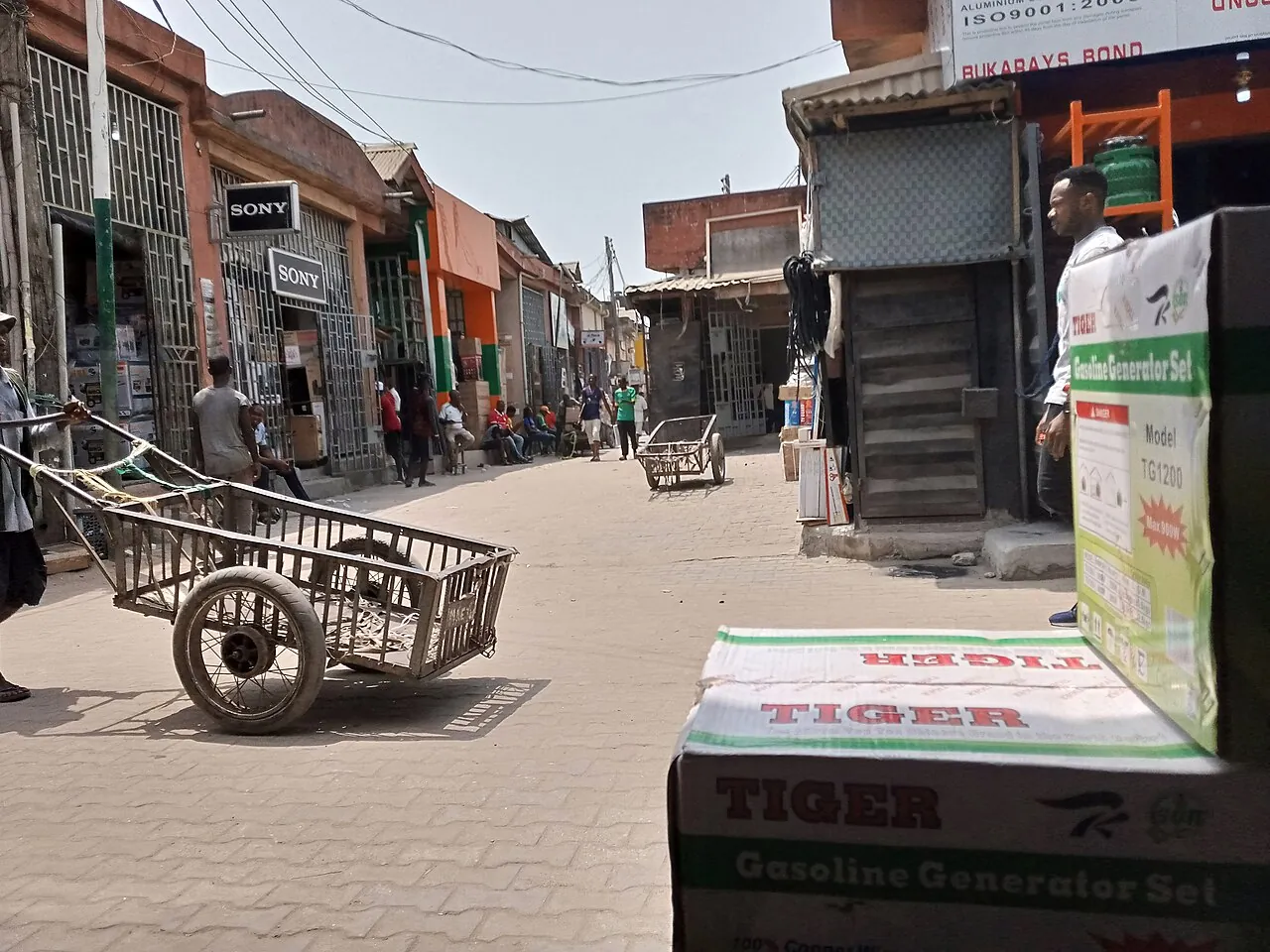 01 / OJO · LAGOS
Ask the buyer for the exact receiving address in Ojo and confirm product-specific import documents before loading.
 02 / IKEJA · LAGOS
Separate the port or warehouse handover from distribution into Ikeja; confirm cartons, labels and consignee details.
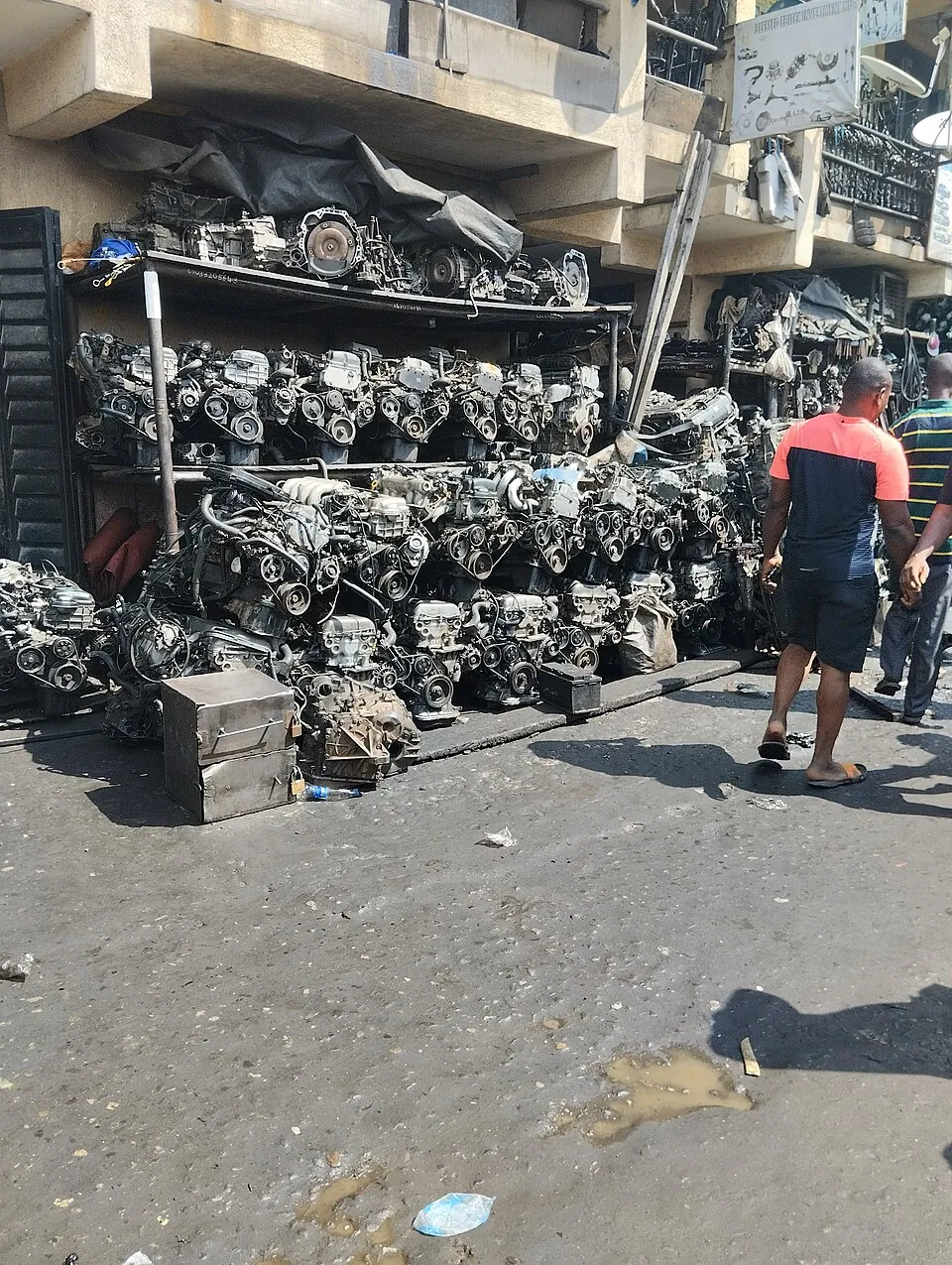 03 / MUSHIN · LAGOS
For dense or heavy parts, quote the actual gross weight, pallet size and unloading method—not just cubic metres.
Independent market photograph, not a DDNZ delivery record