Shanghai → Chancay
About 23 days · sea crossing
The Shanghai–Chancay direct corridor was reported at about 23 days in 2025. This is a route-specific sailing reference, before clearance and delivery in Peru.
CHINA → PERU
A usable Peru freight quote connects the China pickup with the importer and final receiving address. Provide the packed cargo data first, then compare routing, destination handling and delivery on the same basis.
DDNZ coordinates sourcing and export handoff in China. Heaven Born handles freight execution within the confirmed scope. Callao, Chancay and an inland address are different routing or delivery requests; availability needs review for the shipment.
Request a Peru shipment review ↗Compare the ranges for the route shown, then confirm the departure date and handover point for your shipment.
| Mode & route | Planning range | What to compare | Ask about this option |
|---|---|---|---|
| Ocean FCLChina → Callao | 28–44 days | Ocean-leg range from existing records; collection, clearance and inland delivery are separate. | Ask about this option · Ocean FCL ↗ |
| Ocean LCLChina → Callao | 30–58 days | Regional LCL planning range; confirm the consolidation service, cutoff and destination release. | Ask about this option · Ocean LCL ↗ |
| Air freightChina → LIM | 4–11 days | Regional air-freight planning range; confirm the airports, routing and handling scope. | Ask about this option · Air freight ↗ |
Allow for supplier readiness, collection, waiting for departure, clearance and final delivery according to the clock shown. A port or station arrival is not delivery to the receiving address.
FCL record ranges summarise populated Q4 2026 transit-day fields across different origins and services; they are not averages. Other ranges are published route references or existing regional planning ranges, not confirmed HB departures or delivery guarantees.
ROUTES & TRANSIT TIME
Choose the port alongside the delivery address and total destination cost. The fastest sea crossing is only one part of receiving a heavy shipment.
About 23 days · sea crossing
The Shanghai–Chancay direct corridor was reported at about 23 days in 2025. This is a route-specific sailing reference, before clearance and delivery in Peru.
Confirm for the proposed route
Confirm transit time for the named departure point, destination and current departure. Agree collection, customs handling and final delivery separately.
Confirm for the proposed route
Confirm transit time for the named departure point, destination and current departure. Agree collection, customs handling and final delivery separately.
Published route reference, not a current booking commitment. Collection, clearance and onward delivery are outside the cited main-leg time. english.shanghai.gov.cn ↗
Confirm the receiving address, truck access, unloading equipment and delivery appointment before booking. Compare these costs for both ports with the importer.
For tiles, specify pallet dimensions, gross weight and whether pallets can be stacked. For commercial kitchen equipment, add lifting points and any packaging that must stay upright.
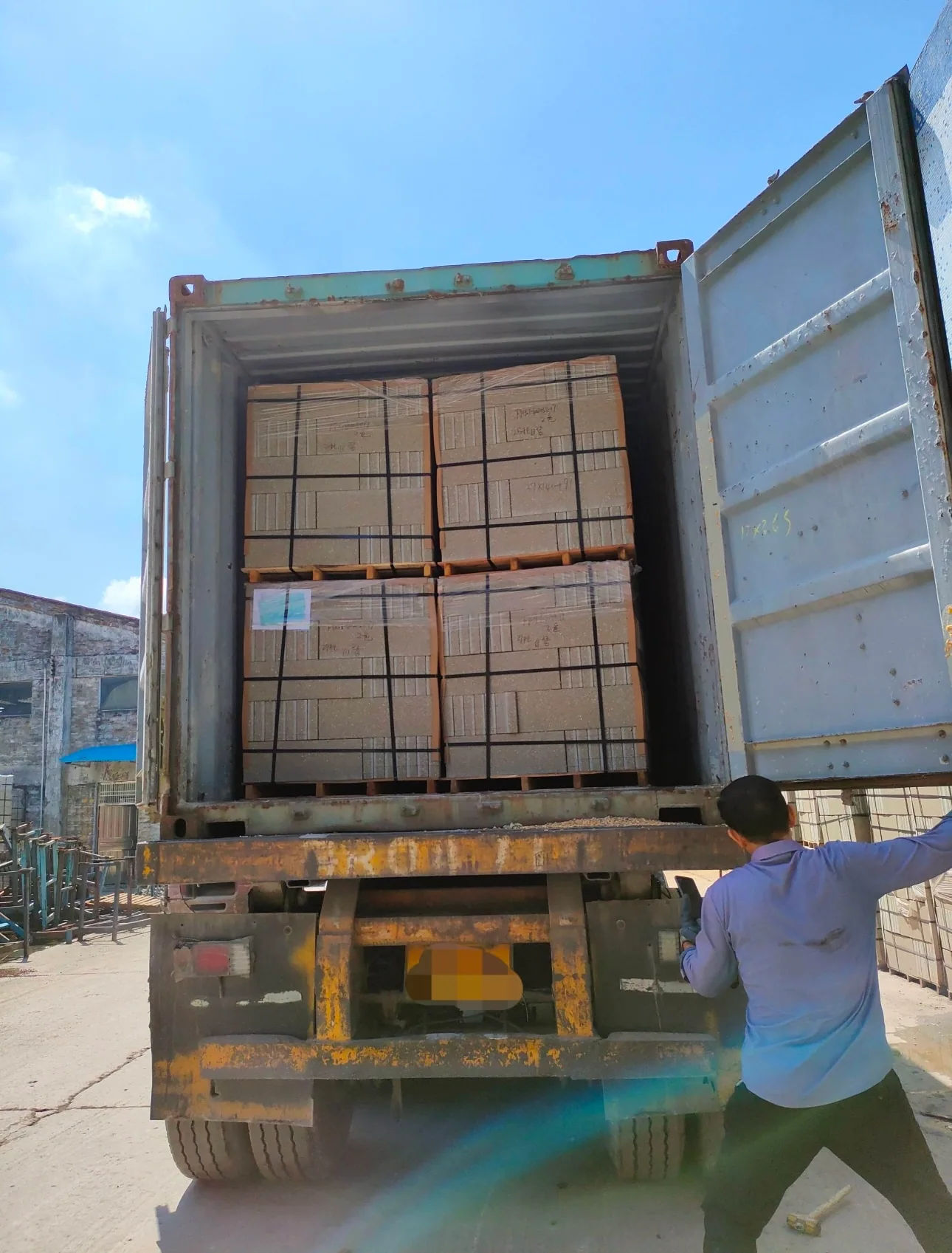
Loading reference: palletised cargo, wrapping and strapping. Use measured pallet dimensions and gross weight for the freight review.
View full image ↗Heavy-cargo planning example · ceramic tiles
Tile cartons can be compact but heavy. Quote the final packed dimensions and gross weight of each pallet, including the pallet and protective packaging. Confirm stackability and how the supplier and receiver will load and unload them.
For an LCL quotation using W/M with one cubic metre compared against one metric tonne, compare the packed volume with gross kilograms divided by 1,000. The higher figure determines the rating units under that quotation’s terms.
For example, a hypothetical shipment of 3 CBM and 4,500 kg produces 4.5 W/M units on that basis. It does not establish a freight price. Minimum charges, rounding, density limits and origin or destination charges must be checked in the actual quotation.
Compare LCL and FCL using the same pallet list. Check payload and handling limits before assuming that spare container volume means more tiles can be loaded.
For ordinary import-for-consumption procedures, SUNAT requires the owner or consignee to have an active RUC and not be classified as “no habido.” Limited exceptions exist; do not use an individual-import exception as an assumption for a commercial shipment. SUNAT import procedure
Have the importer and customs representative review the product classification and any product-specific restrictions. For tiles, supply the material, intended use, dimensions, finish and technical information available from the supplier. A suggested HS code is a starting point for review.
SUNAT’s procedure lists transport and commercial documents, plus insurance, control or origin documentation where applicable. Prepare consistent cargo and commercial data for that review. If seeking preferential tariff treatment, ask the importer to confirm eligibility and the required origin proof; buying in China alone does not settle the tariff treatment. SUNAT supporting documents

Review RUC status, product classification and the commercial and transport documents with the importer before shipping.
Official guidance ↗For LCL, request destination charges explicitly rather than comparing only an ocean rate per CBM. Record who arranges and pays for each stage. A quote labelled “door delivery” still needs a named address and a clear responsibility list.
Specify whether your request ends at Callao, another proposed gateway such as Chancay, a collection warehouse or your final address. Confirm the gateway against an available sailing and the receiving plan before booking.
For Lima or an inland delivery, send the district or locality, postcode if available, full address, receiving hours and vehicle restrictions. For heavy pallets, state whether a forklift or other unloading equipment is available and who supplies it. Include a contact who can accept the goods and report visible discrepancies.
Distinguish expected departure, port arrival, release and final delivery. The confirmed itinerary and receiving arrangements determine the estimate; a general transit range does not establish a delivery date. Agree who monitors changes and who handles storage or waiting if the handover is delayed.
PeruDestination ports
Port locations are approximate. Confirm the terminal and charges for each shipment.
Locate the gateway, then confirm the collection point or final receiving address.
Geographic context, not a sailing itinerary. Boundaries: Natural Earth.Record each supplier’s arrival, package count and visible packing condition. Resolve shortages or damage before merging the final packing list. Reconcile pallet IDs, quantities, weights and dimensions after any repacking.
For tiles, agree protection for edges, restraint and stacking before loading. Keep the released packing list and loading records tied to the shipment reference. A loading photograph can support a visible-condition check; it cannot by itself establish the destination, customs release or delivery outcome.
Is the cheapest rate per CBM the cheapest tile shipment?
Not necessarily. Check the quote’s weight/measure basis, minimums, handling and destination charges against the final pallet list before comparing total costs.
Can a shipment enter through Chancay instead of Callao?
Treat it as a route request to review. The carrier option, cargo acceptance, importer arrangements and final delivery cost must be confirmed for the intended shipment.
Does delivery pricing include import taxes and unloading?
Check the written inclusions. Identify the importer and declaration party, list taxes and local charges, and state who provides unloading. Do not assume that all these items are included in a destination name or service label.
Provide the product and intended use, proposed HS code if known, quantity, package or pallet count, final packed dimensions and gross weight. Add photos, cargo value, agreed trade term, supplier locations and ready dates. Flag batteries, liquids, magnets or other handling-sensitive attributes where present.
For tiles, include material, size, pallet weight and stackability. Give the importer’s RUC status and clearance contact, proposed gateway, final address and unloading facilities. State the required receiving date and whether it is flexible.
Send my Peru cargo brief ↗