DDNZ / THE VISUAL POWER GUIDE
Picture your day. Find your power.
Explore a scene, choose your appliances and compare six reference models. See what your power station could do for your day.
Build a load plan
Stay a little longer.
Power station
Energy for the day. Power for the moment.
Choose a reference below, then test it against your appliances. Capacity and rated output change together.
Edit appliances & runtime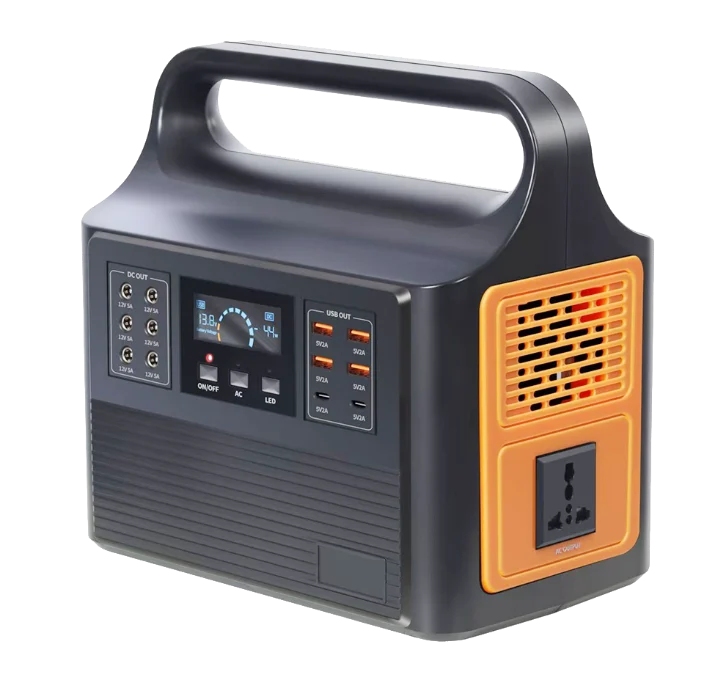
01 / Wh ÷ W = h
Build your everyday setup.
Tap an appliance to include it. Adjust its watts and quantity, then watch your power plan respond.
Lighting and phone charging. Add a refrigerator to see how the energy budget changes.
Editable example watts, not appliance guarantees. This planner treats selected devices as simultaneous, steady AC loads, including their adapters. For direct DC or USB use, verify the port separately.
Runtime = stored Wh × usable % ÷ running W. The percentage is an assumption covering conversion and other losses, not a tested efficiency. Temperature, ageing and standby draw change the result.
Which models cover your setup?
Compare the entered running load and target duration at your usable-energy assumption. Choose a model to update your plan.
3HZ-300ST
198.4 Wh · 300 WMeets the entered power & energy
3HZ-300BG
198.4 Wh · 300 WMeets the entered power & energy
Tieding · p.51
577 Wh · 600 WMeets the entered power & energy
EcoFlow DELTA 3 Classic
1,024 Wh · 1,800 WMeets the entered power & energy
EcoFlow DELTA 3 Max
2,048 Wh · 2,400 WMeets the entered power & energy
EBOOM LXYT-24
3,500 Wh · 2,400 WMeets the entered power & energy
This checks running power and estimated energy only. Confirm voltage, ports, starting demand and the measured sample before buying.
02 / 3HZ-300ST
Three numbers. Three different jobs.
Stored energy
198.4 Wh0.1984 kWhThe size of the tank. More Wh can mean more time at the same load.
Rated AC output
300 WContinuous ratingThe load it can supply continuously. Add the watts of devices running together.
Listed full AC charge
~3 hAccording to sourceA source claim for the listed setup. Starting charge, temperature and settings affect the result.
Put the capacity in perspective.
All bars use the same linear scale. 1kWh = 1,000Wh. These are stored capacities, before conversion losses.
Compare Wh, not mAh alone: Wh = Ah × nominal V. A 10,000mAh pack at 3.7V stores 37Wh. Phone charging also loses energy; a 10W charger rating does not tell you the number of full charges.
03 / AC · DC · USB
Follow the energy. Then check the port.
A functional diagram, not an internal wiring plan. Select an output to see what matters for this model.
3HZ-300ST
AC × 1 · 220 V
The total rated AC power is shared across sockets. Check voltage, frequency and motor/compressor starting demand. Boost and surge ratings are separate from continuous power.
Catalogue specification · 3HZ-300ST
12.8V / 15.5Ah battery. 300W continuous, 500W peak. One 220V AC outlet; six 12V DC5521 outputs; two USB-A and two USB-C, each listed at 5V/2A.
View product details ↗04 / THE RETURN JOURNEY
More panel watts do not always mean faster charging.
The station’s input limit comes first. Then sunlight, panel angle, temperature and the final charging phase affect time.
3HZ-300ST
Catalogue specification
AC charging: 3h claimed. Solar: 18V/100W, 3h claimed; panel inclusion is unspecified. Confirm PV voltage limits, connector and charge test conditions.
PV limit not given: confirm the input before modelling a panel.
For the 3Hz models, the 100W figure describes the quoted panel setup, not a verified input ceiling.
Wh ÷ (lower of panel W or listed PV limit × assumed input %). This excludes further charging losses and taper, so actual elapsed time can be longer. No sunlight or incompatible voltage means no useful charging.
05 / SPECIFY · TEST · REPEAT
A good purchase survives the real-world check.
Use the visual plan to define a sample test, then carry the same requirements into the production order.
Right electrical version
Specify country, voltage, frequency and socket. Confirm output under your real load; a higher watt figure does not correct the wrong voltage.
Dry, ventilated operation
Follow the model’s temperature limits. Keep cooling paths clear, protect it from rain and keep charging connectors dry. A battery’s protection rating may differ from the whole unit.
A sample with measured results
Measure delivered Wh, sustained load, starting behaviour, charging time and the ports you will use. Record settings and ambient temperature with the result.
A product you can service
Agree spare parts, warranty handling and batch traceability. For branded references, confirm the supplying entity, regional warranty and sales rights for your destination.
The EBOOM booklet also contains household battery cabinets. A storage battery needs a compatible inverter and installation design; do not compare its kWh alone with a complete portable AC station.
Selected models from the supplied 3Hz quotation, Tieding catalogue, EcoFlow industry catalogue (PDF pp.6–7) and EBOOM catalogue (printed p.20). New catalogue models are quoted by configuration.