
For Saudi and UAE importers buying from China, build the Ramadan 2027 shipping plan around the day stock must be available in your warehouse. Use 45–55 working days for sea freight and 12–15 calendar days for air freight, including destination clearance and delivery, as initial planning estimates. Keep production, collection and booking time separate. Sea freight suits the main stock order; air freight can cover a selected replenishment batch. With Ramadan provisionally starting on 8 February and China’s Spring Festival holiday starting on 5 February, leaving the buying decision until January gives you less room to recover.
- Give the main order and the replenishment order separate warehouse-receipt targets.
- Read the sea estimate as roughly nine to eleven weeks, not 45–55 calendar days.
- Reserve air freight for SKUs whose shortage justifies the extra delivered cost.
Send DDNZ your product list, China collection point, destination city and required warehouse date. We can start by separating what must move first from what can wait.
1. Set two receipt dates before choosing a departure
Use 8 February 2027 as a provisional Ramadan start for planning. Allow for Eid al-Fitr around 9–10 March, subject to the destination country’s official announcement. Your commercial deadline should usually sit earlier: goods still need receiving, checking and distribution to dealers or shops.
China’s official Spring Festival break runs from 5 to 13 February 2027. Ask each supplier for its own final production day, collection deadline and reopening plan. A factory calendar and a public-holiday calendar are different things. Also check the destination broker, delivery team and warehouse’s Ramadan arrangements rather than assuming every Gulf operation follows the same hours.
For example, a wholesaler might want its main shipment signed into the warehouse by 29 January, with an Eid top-up available by 1 March. Those are buying targets chosen for this example. Put your actual receiving dates on the enquiry before comparing freight options.
2. Sea and air estimates: what the days include
The following are DDNZ’s initial China-to-Saudi/UAE stock-planning estimates for ordinary, non-dangerous commercial goods. Confirm the route, cargo acceptance and delivery scope for your shipment before booking.
| Mode | Planning estimate | Counting basis and scope |
|---|---|---|
| Sea freight | 45–55 working days | Count from the day after actual vessel departure to destination warehouse receipt, including clearance and final delivery. Use Monday–Friday for this planning calculation; additional public-holiday interruptions need separate allowance. |
| Air freight | 12–15 calendar days | Count from the day after actual flight departure to destination warehouse receipt, including clearance and final delivery, assuming smooth clearance. Weekends count. |
These figures are planning allowances, not a port-to-port sailing time or a guaranteed delivery service. Vessels continue sailing at weekends; the working-day convention is simply the basis used here to budget the complete sea-delivery window. It does not describe every operator’s working week.
Production, China collection, consolidation, waiting for departure and export preparation happen before this clock starts. Add them separately. For LCL, ask where destination deconsolidation fits within the quoted delivery window. When comparing quotations, put both offers onto actual calendar dates and the same warehouse address.

3. Work backwards with this stock-arrival table
The examples below use the estimates above, start counting the day after departure and do not deduct extra public holidays. The warehouse targets remain 29 January for main stock and 1 March for the Eid reserve. These are illustrative departure scenarios, not advertised sailings or flight bookings.
| Shipment scenario | Illustrative actual departure | Calculated warehouse-receipt window | What the buyer should do |
|---|---|---|---|
| Earlier main stock by sea | 13 November 2026 | 15–29 January 2027 | Meets the example 29 January target at the slow end, but leaves no extra holiday or disruption allowance against that target. Check whether goods can actually catch this departure. |
| Later main stock by sea | 20 November 2026 | 22 January–5 February 2027 | The slow end misses the warehouse target and leaves only three days before the provisional Ramadan start. Move earlier or split priority stock. |
| Early-December stock by sea | 7 December 2026 | 8–22 February 2027 | Falls during the provisional Ramadan period. Use for later demand or reconsider the mode for time-critical SKUs. |
| Pre-Ramadan air top-up | 15 January 2027 | 27–30 January 2027 | The slow end is one day past the main-stock target. Move earlier if 29 January is firm; confirm cargo readiness, flight space, documents and a receiving appointment. |
| Eid reserve by air before the China holiday | 25 January 2027 | 6–9 February 2027 | Can be held for later Eid distribution. Arrange storage and receiving; do not assume new production after the holiday will fit the same plan. |
Counting back from 29 January gives 13 November as the sea departure limit at 55 working days. Counting back from 1 March gives 14 February as the air departure limit at 15 calendar days. Both limits exclude any extra buffer. The air date is just after China’s official holiday, so a shipment that still needs production or collection should have a pre-holiday option.
Use the slow end of each range when working back from your receipt target. Then move the departure earlier by your chosen disruption buffer, and move the cargo-ready date earlier again by the confirmed collection, export and cut-off requirements. If the available schedule cannot meet that result, change the stock split rather than shortening the estimate on paper.
4. Decide which stock deserves air freight
Suppose you allocate 60%–70% of a seasonal order to the main sea shipment. Treat that as a starting scenario, not a fixed purchasing rule. Review sales history, stock already on hand and the cost of holding slow-moving items before fixing quantities.
The air batch should have a reason to exist: a proven seller running short, a confirmed dealer order, or a small missing item needed to complete a sale. Compare the extra landed cost with the margin and sales you could realistically preserve. Bulky, low-margin cartons can consume the replenishment budget quickly.
Set a practical trigger: if usable stock will run out before the slower end of the next confirmed sea-delivery window, price an air batch covering the gap. Confirm available finished stock before selling that plan internally. Paying for air freight does not remove production time, missing documents or cargo restrictions.
5. Give the factory and forwarder one usable brief
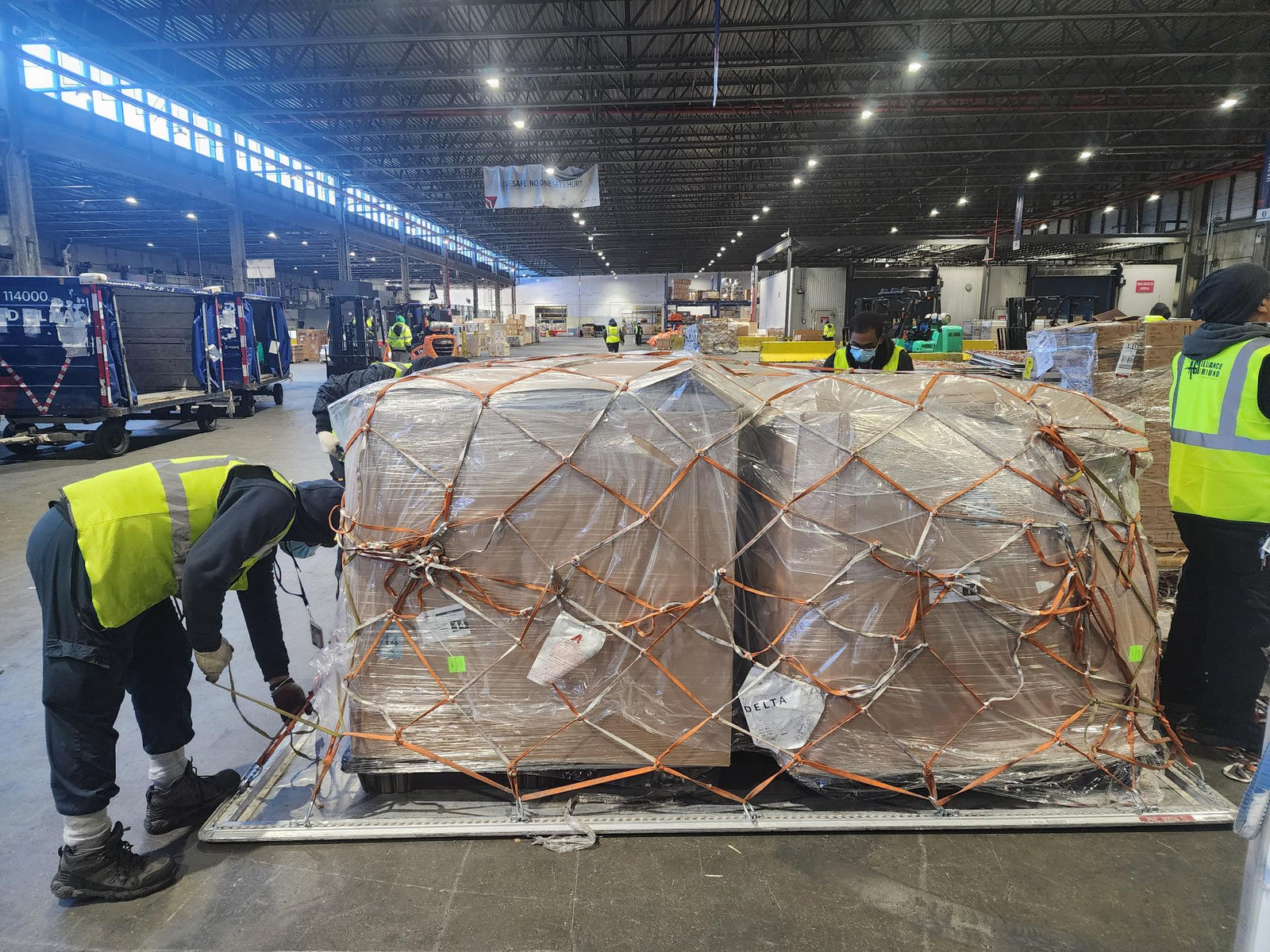
For every supplier, record the SKU, quantity, packing dimensions, gross weight, cargo-ready date and last collection date. Keep a ready batch from being held back by one late supplier unless combining them still meets the receipt target. Confirm who checks the commercial invoice, packing list and destination-specific requirements before handover.
DDNZ’s integrated manufacturing and trade approach lets us discuss factory-price supply, model-specific low-MOQ trials and the export plan together. A low unit price becomes useful when the ordered specification, packing and shipment timing also work. For freight planning, send what you already know; a product list and warehouse address are enough to start identifying the missing inputs.
Request a Ramadan stock and freight comparison from DDNZ. Include your quantities, China pickup locations, carton sizes and weights, destination warehouse and latest acceptable receipt date. Ask for sea and air options with the inclusions and counting basis written alongside the price.
Frequently asked questions
Is an early-December sea departure early enough for Ramadan 2027?
Under the 45–55 working-day planning estimate, a 7 December departure calculates to 8–22 February before extra holiday allowances. That is too late for the example 29 January main-stock target. Check a route-specific delivery window, then move earlier or split the urgent items into another shipment.
Why does sea freight use working days while air uses calendar days?
These are the stated planning conventions for this guide: sea uses a five-day week and air counts every day. Both estimates finish at warehouse receipt and include clearance and delivery. Ask the forwarder to convert its quotation into dated arrival windows so different counting conventions do not distort the comparison.
Can I wait until after Chinese New Year to buy the Eid top-up?
Only if finished-stock availability and a confirmed delivery plan still meet your own Eid distribution deadline. Check reopening and cargo-ready dates first. For important SKUs, reserving finished goods or sending a pre-holiday batch gives you an alternative to relying entirely on post-holiday production.
Planning references
- International Astronomical Center: Ramadan 1448 crescent forecast — calculated planning date; country announcements take precedence.
- International Astronomical Center: Shawwal 1448 crescent forecast — calculated dates differ by calendar region; Eid is not yet a confirmed local holiday date.
- China State Council: public holidays for 2027 — official Spring Festival holiday dates.
- Maersk: November 2026 Asia Pacific market update — supplier closure, cargo-ready and gradual production-recovery planning.
- Maersk: ocean transit versus complete delivery time — journey scope and route differences. The 45–55 working-day sea and 12–15 calendar-day air ranges in this guide are DDNZ planning inputs, not figures attributed to Maersk.
Photo credit: Container loading with forklift at a warehouse in Thailand by Goterrestrial, CC BY 4.0.
