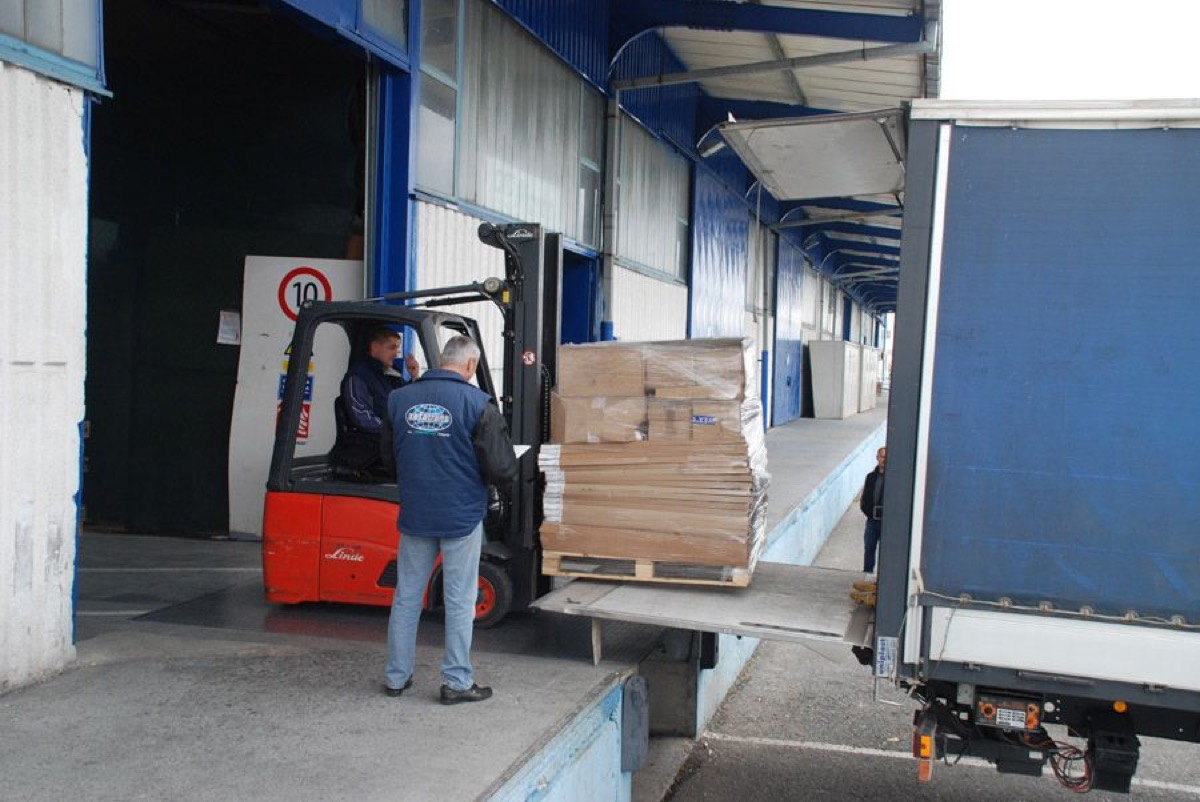
A door-to-door quote for LCL ocean freight should say where the truck stops and who takes the freight off it. Before you book, give the forwarder the exact receiving point, the packed dimensions and gross weight of the largest and heaviest units, and the equipment available at the warehouse. Ask them to confirm whether the service ends on the truck, at ground level beside it, or at a named receiving area inside. If the site has no loading dock, confirm the unloading method and the vehicle that can actually reach the drop point. Have the warehouse accept the plan in writing.
- Agree the handover point before comparing prices.
- Confirm who supplies the truck equipment and who moves the freight.
- Put the appointment and any failed-delivery charges in the booking confirmation.
Start with the route from the gate to the receiving area
Suppose you import two pallets of commercial kitchen spare parts from China. Your warehouse is behind a shared gate. There is no loading dock, the warehouse has a hand pallet jack but no forklift, and a raised threshold separates the yard from the receiving area. A truck can reach the yard. The pallet jack can move a pallet once it is on level ground. You still need a way to get the pallet down from the truck and across the threshold.
Send the forwarder two photos: the approach from the street and the path from the parking spot to the receiving area. Mark the point where you want the driver to hand the pallets over. Give the same information to the warehouse and ask someone there to confirm which vehicle can enter and where it can stop. A delivery address alone rarely captures the access rules of a shared site.
Specify the handover in the quote
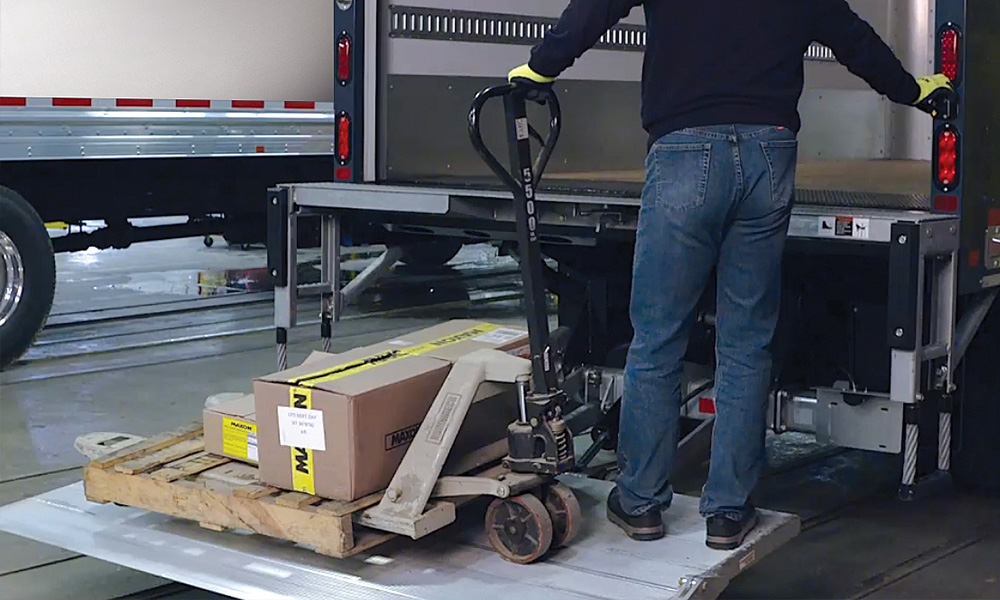
Write the address and the physical handover point. If your forklift operator will meet the truck, ask for delivery ready for receiver unloading at the agreed bay. If you need the driver to lower the pallets, ask for liftgate unloading to a specified ground-level point. If the pallets must reach a receiving area inside, request that move separately and describe the entire route.
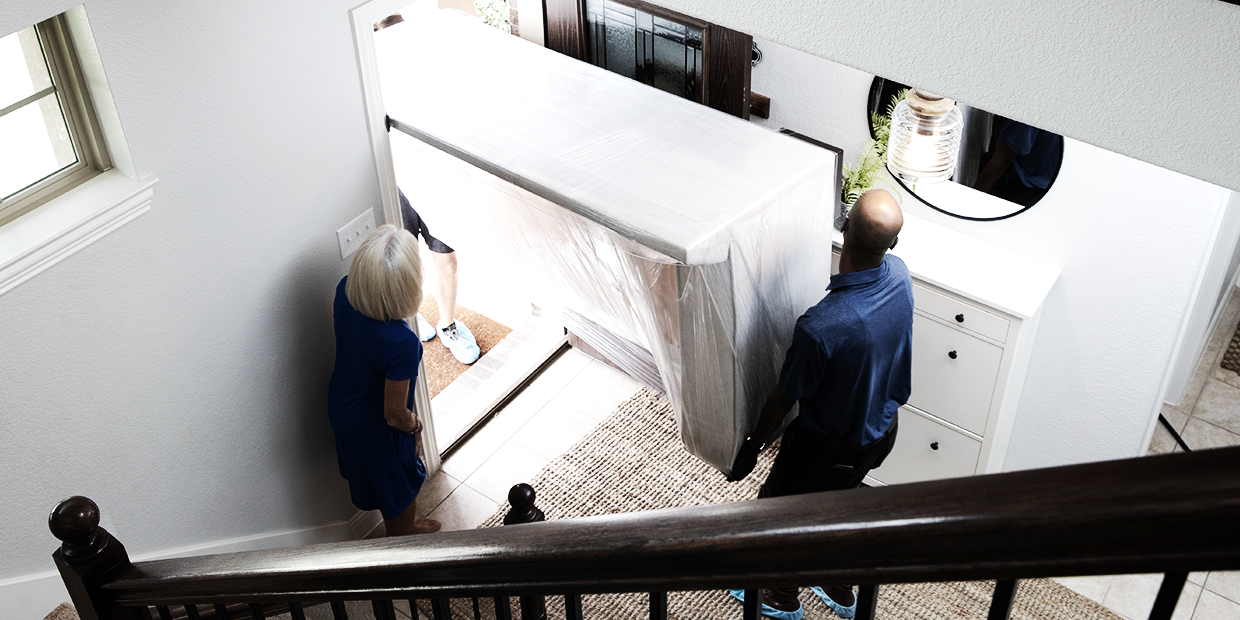
Confirm what the final carrier means by “inside delivery.” The service may have access, distance or equipment limits. Use the actual agreed stop, such as “receiving zone A just inside the marked side door,” and agree who moves the pallet from there to storage.
For the sale contract, ICC Incoterms® 2020 places delivery under DAP and DDP at the named point, ready for unloading. Under DPU, the seller unloads at that point. In a DDP deal the seller also arranges import clearance and pays the applicable import duties and taxes. If the seller’s carriage contract already includes unloading charges under DDP, factor that into the cost allocation. Ask for the actual unloading service in the transport confirmation and keep the sale contract and booking aligned.
Before you compare truck quotes online, answer four questions
For the same two pallets, a commercial warehouse with a loading dock, a forklift and its own unloading crew may qualify for standard commercial delivery. Change the destination to a site without a dock or working forklift and the carrier may need different equipment, more time or a different crew. Those changes can alter both the price and which carriers accept the job.
- What type of address is it? Enter the full address and actual site type. A home used for business may still count as residential. Schools, construction sites, farms and exhibition venues can have separate access rules. Confirm how the carrier classifies the site.
- Is there a working dock or forklift? If the receiver has no suitable way to unload, ask whether a liftgate truck can serve the site and handle the packed units. Liftgate service lowers freight from the truck to the ground.
- Can the receiver unload? Choose Receiver unload only after the receiving team confirms its staff and equipment. Give the carrier the dimensions and gross weight of the heaviest piece so it can confirm what its driver and equipment can handle.
- How far inside does the freight need to go? If it must cross the threshold or reach a specific indoor spot, request Inside Delivery and give the exact drop point. For stairs, room placement, unpacking or packaging removal, ask which tasks the carrier can quote separately or under White Glove. Service names and scope vary by carrier.
A postal code and a pallet count can give you a price for a different service from the one your warehouse needs. Compare rates after the address type, unloading method and extra services are entered. If the truck arrives without the required equipment or crew, the carrier may need to charge for the change, decline the requested service or reschedule the delivery.
Send this receiving checklist before booking
Ask the forwarder to return the completed table with the quote. Send the answers to the receiving warehouse as well.
| Field | What to send or request |
|---|---|
| Address type and delivery point | Full address, carrier classification, gate, bay and where the receiving team takes over. Mark this spot on a photo or site plan. |
| Packed units | Number of pallets or crates, dimensions and gross weight of each, plus fragile, non-stackable or awkward units. Confirm the dimensions after any repalletizing. |
| Vehicle access | Photos, turning space, entry and height limits, stopping restrictions and the permitted vehicle type. |
| Unloading and movement | Who unloads, who supplies the liftgate, forklift or pallet jack, and who moves the units beyond the truck. Confirm equipment capacity for the actual cargo. |
| Inside delivery and extra handling | Give the final indoor drop point, access route, floor, stairs or lift, and any unpacking or packaging removal. Ask the carrier to confirm each task in writing. |
| Appointment | Receiving hours, booking deadline, contact and backup contact, who confirms the slot, and what shipment or purchase-order reference the warehouse needs. |
| Exceptions and fees | Included waiting time, charging basis after that, failed delivery and redelivery terms, and who can approve extra work before it is charged. |
| Handover record | The proof of delivery, who signs, how many units are handed over and how to record visible exceptions. |
Reconfirm when the shipment is ready for local dispatch
Ask the destination agent to confirm the sequence after customs release. Check when the freight can be collected from the deconsolidation warehouse, whether the pallet details changed, and when the local truck can attend. A projected vessel arrival helps with planning. Book the receiving slot against a confirmed dispatch plan and tell the warehouse when it should expect the driver’s call.
Suppose the warehouse can accept the two pallets on Tuesday, but the carrier’s proposed truck cannot get through the gate. Ask for a suitable vehicle and an updated quote while the shipment is still at the destination warehouse. Confirm who can approve that change and when a revised appointment must be made. On delivery day, the receiver should count the units at the agreed handover point and note visible exceptions on the delivery record where the procedure allows. For damage or missing items, follow the LCL receiving and claims checklist.
Common questions
Does DDP include unloading at my warehouse?
Under DDP, the goods are delivered ready for unloading at the named point. Confirm separately who performs unloading, whether the carriage price includes it, and where the handover occurs.
Is a liftgate enough if there is no loading dock?
A liftgate can lower compatible freight to ground level. Confirm that the platform and rated capacity suit the heaviest packed unit and that a suitable truck can stop on safe, level ground. Agree who moves the freight from that point.
When should I ask the warehouse to book a time slot?
Ask for the warehouse’s notice period before you book freight. Confirm the slot with the local carrier once cargo availability and the dispatch plan are confirmed, allowing enough time to meet the warehouse’s booking deadline.
Get a quote for the exact handover you need
Send DDNZ your receiving conditions on WhatsApp. Include origin, destination postcode, packed dimensions and weights, ready date, a photo of the unloading point, and who should unload and move the freight.
Technical references
- ICC Academy on DAP, DPU and DDP delivery and risk
- ICC Academy on import responsibilities under DAP and DDP
- Maersk LCL service and booked delivery scope
- FedEx Freight liftgate request and handling example
- FedEx Freight service example for inside delivery and handling equipment
- FedEx Freight booking fields for address access and liftgate
- Ryder service examples for room placement and unpacking