Start with what happens before you add the liquid. For stock, soup and sauces that mainly simmer or reduce, shortlist a steam-jacketed kettle. For meat that needs browning before braising, or a sauce base that starts by frying onions and spices, a tilting braising pan gives you a flat heated surface for that first step. If the menu calls for both large stock batches and frequent browning, price both stations against the production schedule. For each quote, send the supplier one typical recipe, the largest batch you plan to run and the time you have to finish it. Discuss your central kitchen equipment list.
- Choose the kettle for liquid-heavy batches. Ask for a mixer demonstration if a thick recipe needs continuous agitation.
- Choose the braising pan when the recipe starts with direct contact on a heated surface. Compare the usable base area.
- Check usable batch size, unloading height and utility connections on the exact model before ordering.
Match the vessel to the recipe
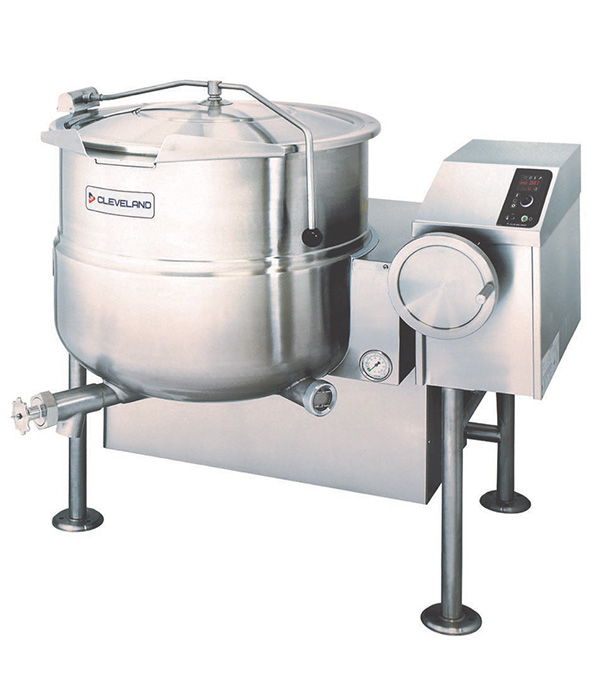
A steam-jacketed kettle uses steam in a jacket around part of the vessel to transfer heat to the food. Check how far the jacket extends on the model you are buying. A tilting kettle can pour into a receiving vessel, while some kettle designs use a draw-off valve for liquids. If you make soup with large pieces of meat or vegetables, confirm how the solids will come out and how the valve or pouring lip will be cleaned. Cleveland's kettle and mixer-kettle specifications illustrate the difference between a basic tilting kettle and one equipped with an agitator.
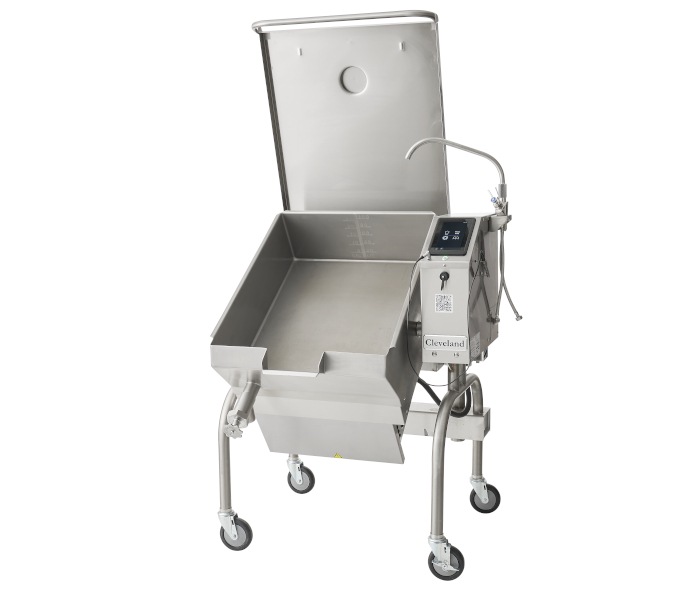
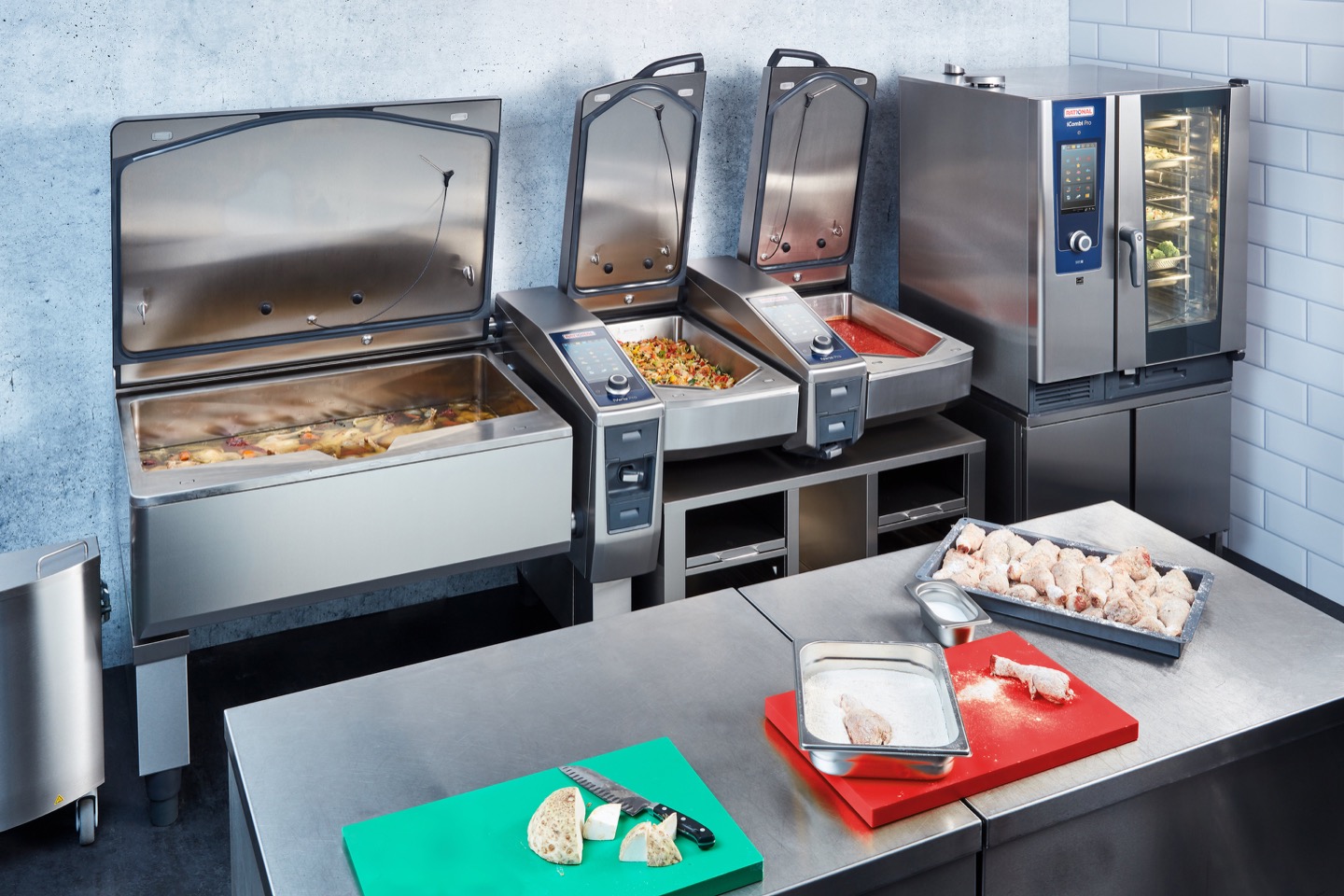
A tilting braising pan, also called a tilting skillet or bratt pan, has a heated flat base. It gives you room to brown ingredients before adding liquid and can carry the same batch through to braising. Compare the actual base dimensions. If the pan is crowded, ask how many browning rounds it takes before the full batch can braise.
| Menu and process | Equipment to shortlist | Check with the supplier |
|---|---|---|
| Stock or soup with a large liquid load | Steam-jacketed kettle | Usable fill, heat-up time and discharge with the planned solids |
| Meat browned before adding stock | Tilting braising pan | Base area, browning load per round and number of rounds |
| Meat stewed in liquid after browning elsewhere | Steam-jacketed kettle | Working batch weight, mixing method and unloading |
| Thick sauce that simmers or reduces | Kettle, with agitation matched to the recipe | Stirring coverage, texture and residue after discharge |
| Sauce that starts by frying aromatics or paste | Tilting braising pan, or a pan plus a kettle for larger runs | Frying load, stirring and the transfer step if using two vessels |
Compare output on the same recipe
Suppose your kitchen makes stock in the morning and a browned meat dish for lunch. Ask each bidder to show how the meat fits in its pan for the browning step. If one machine needs several rounds for that step, include all the rounds in the quoted cycle. Do the same with the kettle and stock. Use the same ingredient starting temperature, load and target finish when comparing heat-up claims.
Ask bidders to report vessel volume, usable fill for the recipe and finished output separately. A deep vessel can hold a liquid batch while the pan's usable base area determines how much meat can brown at once. For a sauce that foams, reduces or thickens, confirm the fill level and stirring arrangement in a trial with a representative recipe. Ask for time from loading through discharge, plus the time to clean and reset. Compare that full cycle with the kitchen's actual production window.
Check the handoff to packing or chilling
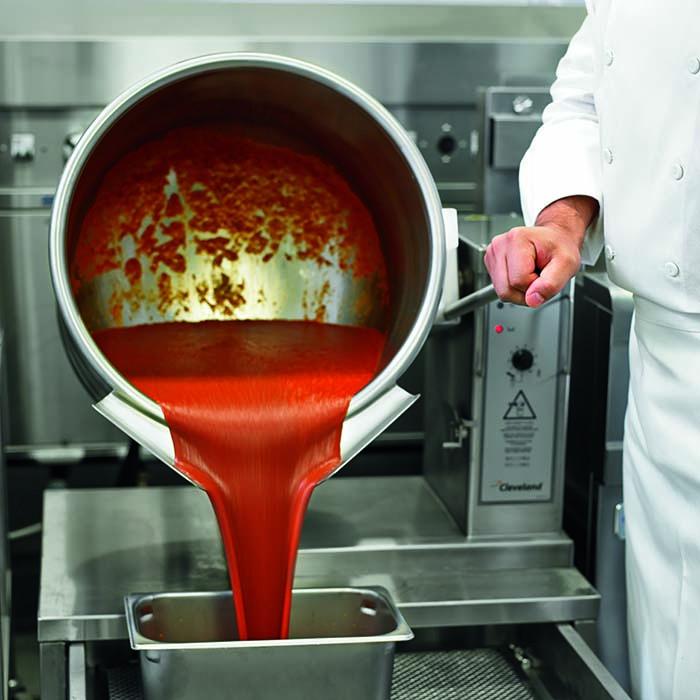
Put the receiving cart, pot or tray on the layout drawing. Check the height under the pouring lip, the path as the vessel tilts, the space for the open lid and the clearance an operator needs to move the load away. If the next station is a blast chiller, agree on how the hot batch is portioned into trays and moved there. Ask the supplier to demonstrate discharge into a vessel of the same height as yours.
Request a drawing with the exact utility and service positions. For electric models, confirm the rated load, voltage, phase and frequency. For gas models, confirm the fuel, required supply pressure and installation instructions. For a direct-steam model, confirm the steam supply and condensate requirements. The Saudi importer should use the model details and proposed HS code to confirm the applicable conformity route through Saber before the order is finalized.
Send a quote request the factory can test
Include the menu, largest raw batch, target finished quantity and available cycle time. Add the kitchen drawing, receiving vessel height and site utilities. Request the model-specific specification, discharge drawing and commissioning scope with the quotation. Ask which valves, tilt parts, controls or agitator parts the local service team can replace and which spares should ship with the machine. Send your equipment brief to DDNZ.
Frequently asked questions
Can a steam-jacketed kettle cook stew?
Yes, a kettle suits stew that cooks mainly in liquid. If the recipe calls for browning first, plan that step separately or compare a braising pan that can finish the batch in the same vessel.
Can a tilting braising pan replace a kettle for soup?
It can handle soup if the usable fill and discharge arrangement fit the batch. For repeated large stock or soup runs, compare usable yield and turnaround time against a kettle on the same recipe.
Do I need an agitator for thick sauce?
Specify the sauce and the batch before choosing. Ask the supplier to show how the agitator reaches the base and walls, preserves the desired texture and comes apart for cleaning.