Three points to know
- The launch moved beyond a press announcement. Freight News documented Ever Useful at the 3 July launch call, while a later DGT record listed Evergreen vessel Ever Utile working at Durban; the DGT sheet does not identify the service code.
- The network adds a useful direct-call option. Published rotation information covers Shanghai, Ningbo, Kaohsiung, Shekou and Singapore before Durban and Cape Town.
- Port execution still controls the final result. Durban Gateway Terminal is publishing live stack, storage and berth updates and has temporary import-stack rules in force through 31 August 2026.
What the SAF service changes
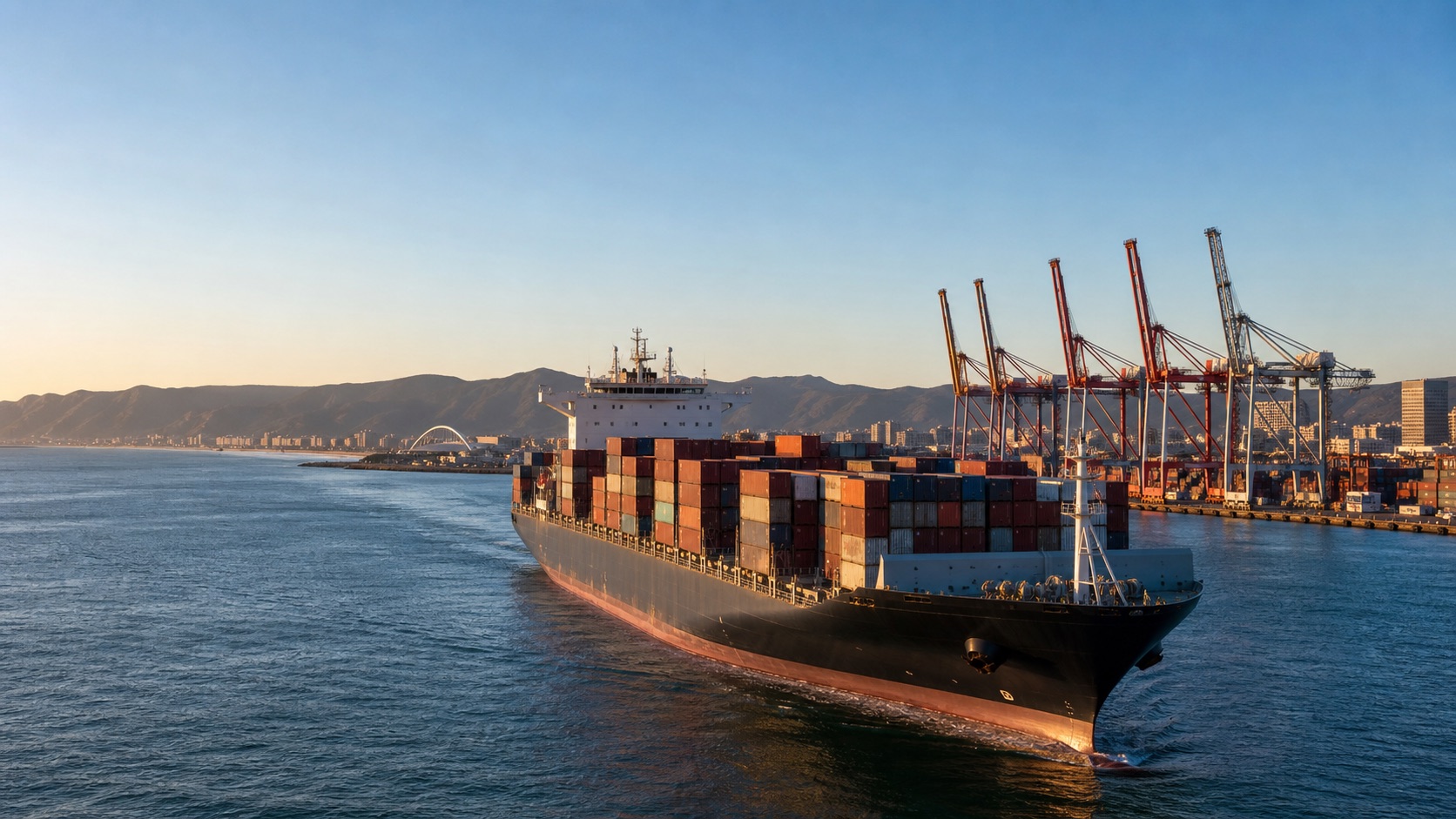
Freight News reported that the weekly SAF rotation calls Shanghai, Ningbo, Kaohsiung, Shekou, Singapore, Durban and Cape Town. It cited 27 days from Shanghai to Durban and 32 days from Shanghai to Cape Town, plus through-bill coverage to Gaborone and Harare. Those figures are useful for a first comparison, but they are carrier-published schedule values—not a promise for every shipment.
The operational evidence matters. Durban Gateway Terminal’s 25 July vessel update listed Ever Utile working under a Durban vessel visit, and the terminal’s live update page continued to publish vessel, stack, storage and berth records through 2 August. The launch report therefore supports the initial SAF call; the later DGT sheet separately confirms continued Evergreen terminal activity but does not label the SAF service code.
| Decision field | What SAF may improve | What still needs confirmation |
|---|---|---|
| China origin | Direct rotation from major Central and South China ports | Exact CY cut-off, equipment release and rolled-cargo policy for the booked sailing |
| South Africa gateway | Calls at both Durban and Cape Town | Which gateway gives the better final-mile route for the consignee |
| Transit | Published weekly schedule and port-to-port benchmark | Actual vessel schedule, berth window and delivery appointment |
| Inland reach | Through-bill options reported for Gaborone and Harare | Carrier liability point, border handover, free time and final delivery scope |
| Total cost | Extra capacity can create a competitive quotation | Origin charges, destination charges, detention, storage and inland costs |
Why a faster port-to-port number can still lose
A direct call removes some transshipment exposure, but it does not remove origin or destination variability. A sailing with a better headline transit can still produce a later delivery if the container misses the China cut-off, waits for a terminal appointment or cannot move inland within free time.
Durban Gateway Terminal’s 1 July notice temporarily extended general import stack periods from three to four days for vessels arriving between 1 July and 31 August 2026. The terminal said the measure supports cargo flow during seasonal volume, weather risk and a Navis system upgrade. It also stated that the arrangement is not extra storage capacity and excludes reefer and IMDG containers, whose rules remain different. Importers should therefore treat free-time and collection planning as separate commercial checks.

A five-step route decision
- Compare the same shipment. Ask competing forwarders to quote the same container type, gross weight, origin factory, destination and delivery scope.
- Verify the sailing. Record vessel/voyage, CY cut-off, estimated departure, estimated arrival and whether the quoted leg is direct.
- Check the live terminal page. Review current berth, stack and import-storage notices shortly before booking and again before arrival.
- Price the handover. Separate ocean freight from destination terminal charges, customs handover, truck or rail, border movements and possible waiting time.
- Set an exception plan. Agree who monitors delay, who can switch a delivery slot and when storage or detention exposure must be escalated.
What to send for a comparable freight quote
Send the origin postcode, cargo description, HS code if available, package count, dimensions, gross weight, ready date, container requirement, destination address and any dangerous-goods or temperature-control condition. Ask the quote to show validity, included charges, excluded charges, free time and the named route or service.
Need a China-to-South Africa route comparison? Request a freight quote with the cargo-ready date and final delivery point: Request a freight quote
Sources and verification
Last verified: 3 August 2026. Schedule and terminal conditions can change; reconfirm before booking.
- Freight News — Evergreen launches new Asia–South Africa service, 3 July 2026
- Durban Gateway Terminal — live terminal updates
- Durban Gateway Terminal — vessel update, 25 July 2026
- Durban Gateway Terminal — temporary extension of import stack periods, 1 July 2026
Editorial note: this draft uses public carrier, terminal and trade-press records. It does not claim DDNZ shipment performance or customer results.