
Saudi buyers sourcing restaurant, hotel or catering equipment from China should begin with a model-level control sheet, not a price list. Before comparing quotations, fix voltage, phase, utilities, operating conditions and the evidence route for the destination. This guide provides a seven-point RFQ for commercial cooking and refrigeration equipment. It helps importers compare suppliers, inspect the selected model and prepare evidence, while leaving the final Saudi classification and conformity decision to the importer and the relevant accepted body.
1. Freeze the destination record
Record the Saudi consignee, installation city, commercial use, duty cycle, kitchen layout stage and local installation responsibility. Add the approved electrical schedule and every utility interface. If the consultant has not confirmed a field, mark it TBC and stop the supplier from choosing a default export version.
The GCC low-voltage technical regulation contains national differences for voltage, frequency and plug/socket arrangements, and addresses environmental conditions outside controlled indoor environments. Therefore, “GCC version” is not a complete specification; the approved Saudi project schedule must control the configuration.
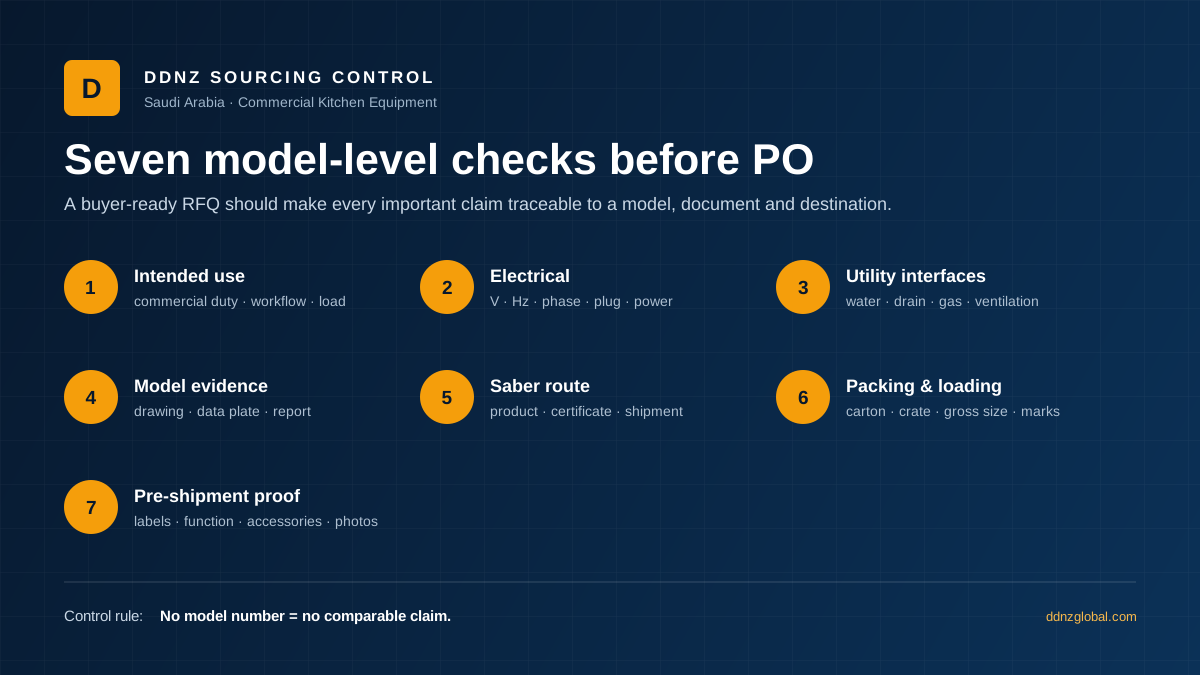
2. Send every supplier the same seven-point matrix
Use the same fields for each quotation. The “release proof” column defines what must exist before a claim is treated as confirmed.
| Control point | Required RFQ detail | Minimum release proof |
|---|---|---|
| 1. Intended use | Application, process, duty cycle, capacity and indoor conditions | Model description and agreed operating scope |
| 2. Electrical | Voltage, frequency, phase, plug/terminal, input and current | Same-model data sheet and data-plate artwork |
| 3. Utilities | Water, drain, gas, ventilation, clearances and heat rejection | Installation drawing and manual |
| 4. Evidence | Manufacturer, factory, model, standard and report references | Documents matched to identity, scope and validity |
| 5. Saudi route | HS code proposal, Saber steps and responsible importer | Importer or conformity-body confirmation |
| 6. Packing | Packed size/weight, protection and shipping marks | Packing specification and final photos |
| 7. Inspection | Quantity, model, function, label, accessories and packing | Signed record with exceptions resolved |
Reusable rule: no model number means no comparable claim; no destination record means no approved configuration; no linked evidence means no compliance assurance.
3. Make utilities model-specific
Commercial equipment often has several configurations under similar names. Model suffixes and data plates may change with voltage, phase, power and plug. Ovens can require water quality, pressure and drain limits; refrigeration can require a declared ambient range and ventilation clearance.
Ask for both the data sheet and installation document. Manufacturer examples show useful comparison fields: an Electrolux Professional griddle lists voltage, phase, frequency, watts, plug and circuit ampacity; an Atosa chef-base freezer sheet includes electrical load, refrigerant, packed dimensions and weights; a Hoshizaki refrigerator adds ambient range and refrigerant charge. These are field examples, not approved Saudi models. The quoted Chinese model needs equivalent evidence.
4. Separate Saber routing from document collection
SASO’s Products Tracking page lists product registration, conformity-certificate activity for regulated products, shipment certificates and self-declaration, and states that a shipment certificate is required for each incoming shipment.
That does not mean every kitchen machine follows one identical certificate route. Product type, HS classification, use and current regulation determine the path. The Saudi importer or authorized representative should confirm it in Saber and, where relevant, with an accepted conformity assessment body before shipment release.
The supplier should provide a consistent manufacturer name, factory address, model, drawings, manual, label artwork and test documents with checkable scope. The importer remains responsible for confirming the current route.
5. Match the standard to the equipment
Do not combine cooking and refrigeration into one vague “CE report” request. IEC 60335-2-36:2021 covers commercial electric cooking and baking ranges, ovens, hobs and similar equipment. IEC 60335-2-89:2019 addresses commercial refrigerating appliances and ice-makers with motor-compressors or split arrangements.
Ask which product-specific standard and edition appears on the report, and whether the offered model and manufacturer are in scope. A household-product report or a report for another factory may not support the commercial unit.
Five document-review red flags
- The quoted model suffix is absent from the certificate scope.
- The report manufacturer or factory differs from the purchase contract.
- The label omits the agreed electrical configuration.
- The document is expired, cropped or cannot be checked with the issuer.
- The supplier hides issuer, dates, scope or technical conclusions rather than only customer-sensitive details.
6. Convert the RFQ into the inspection checklist
Copy the approved model, configuration, accessories and packing requirements into the inspection plan. Photograph product and carton labels, record batch identification where available, and test only agreed functions under safe utilities. If a three-phase unit cannot be powered safely, state the limitation instead of reporting a full function pass.
For refrigeration, verify the refrigerant and label against the approved record; a short unloaded power-on test does not prove performance. For cooking equipment, record heating or control operation under an agreed method. Treat scratches, incomplete welds, loose components, missing manuals, wrong plugs and substitutions as formal exceptions.
Show the final packed unit, internal protection, carton or crate condition, shipping marks and measured packed dimensions. Reconcile the figures before freight booking.
7. Use three release gates
PO release requires the destination record and normalized comparison. Balance-payment release requires matched technical documents and an accepted inspection result. Shipment release requires the confirmed Saudi conformity route, final invoice/packing data and shipment evidence.
DDNZ can normalize quotations, collect technical files, arrange inspection, consolidate goods and coordinate export freight. It should not guarantee local approval without the responsible Saudi party and accepted body.
Sources and verification boundaries
- SASO — About Product Safety
- SASO — Products Tracking / Saber services
- GSO — Gulf Technical Regulation for Low Voltage Electrical Equipment and Appliances
- IEC 60335-2-36:2021 — commercial electric cooking equipment
- IEC 60335-2-89:2019 — commercial refrigeration
- Electrolux, Atosa and Hoshizaki — model-level specification examples
- Cover photo: Evan Marvell on Unsplash, used under the Unsplash License.
Last evidence check: 30 July 2026. Requirements can change; confirm the current Saber classification and accepted evidence for the exact model before shipment.