
China–Saudi cargo moving into September 2026 cannot be booked responsibly from one headline ocean-freight number. Maersk introduced a Peak Season Surcharge of USD 1,000 for all 20-foot containers and USD 2,000 for all 40/45-foot containers from Far East Asia to Saudi Arabia, effective 10 August. But the more important question is whether the carrier will accept your exact cargo through your intended Saudi gateway. Current carrier notices differ by cargo type, port and routing. Before paying a deposit, tie the quote to the cargo, gateway, confirmed route, surcharge validity and fallback plan.
Three points for Saudi importers
- Confirm cargo acceptance before comparing price. Dry, reefer, dangerous-goods and out-of-gauge bookings may not have the same Saudi gateway options.
- Treat the port and inland point as separate decisions. A quote to Dammam may involve discharge at Jeddah and a landbridge rather than a direct ocean call.
- Ask for an itemised, dated quote. Base ocean freight, PSS, emergency or contingency charges, inland transfer, destination charges and free time should not be hidden inside one total.
What changed in the current market
Maersk’s PSS notice applies from China and other Far East Asian origins to Saudi Arabia from 10 August 2026 until further notice. The notice also says other local and contingency charges may apply. That means an importer should not assume the PSS is the only addition to the base rate.
The operational side is even more important. In its 19 August Middle East update, Maersk published different booking positions for Jeddah, King Abdullah Port, Dammam and Jubail, with further differences for dry, reefer, dangerous-goods, in-gauge and out-of-gauge cargo. The notice is carrier-specific and volatile; it is not a permanent rule for every shipping line.
A gateway-and-cargo check before requesting rates
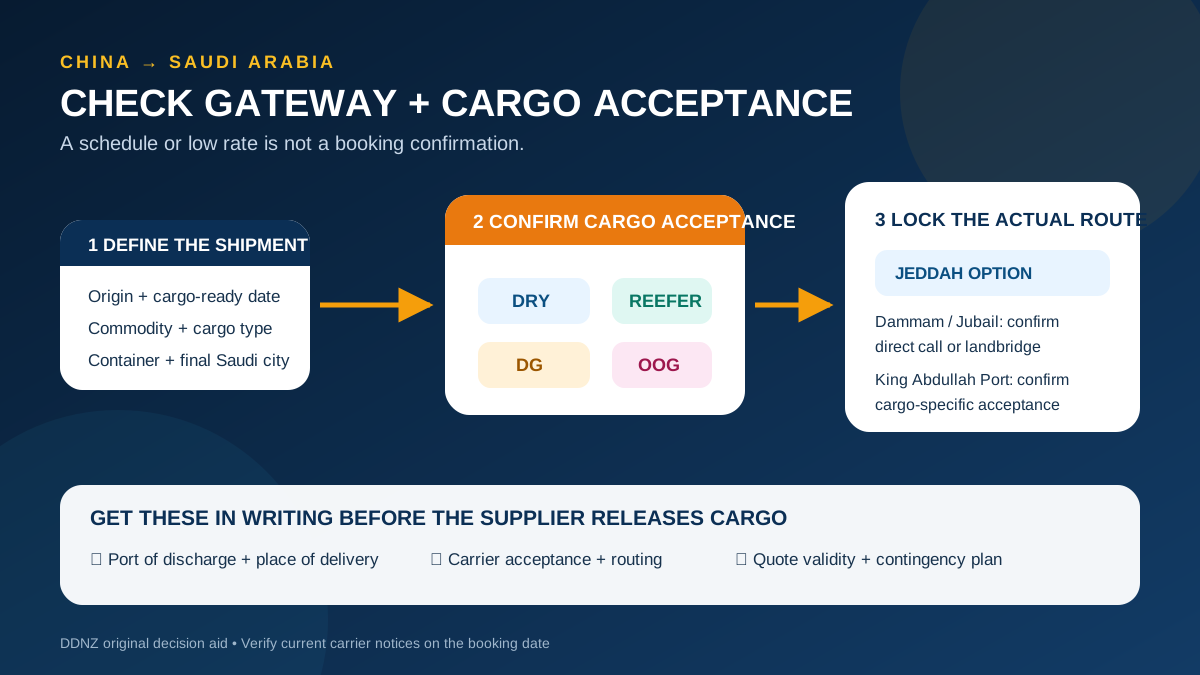
| Shipment scenario | Public notice to investigate | What the buyer should obtain in writing |
|---|---|---|
| Dry cargo to Jeddah or King Abdullah Port | Maersk listed acceptance on 19 August, subject to availability | Confirmed port of discharge, vessel or service, space status and quote validity |
| Dry cargo for Dammam or Jubail | Maersk’s 19 August notice described dry-cargo restrictions at Dammam/Jubail and continued Saudi movements through Jeddah; Hapag-Lloyd’s 17 August update said Dammam had no delays but required case-by-case planning | Ocean port, landbridge provider, place of delivery, inland cost and estimated handover sequence |
| Reefer cargo for Dammam, Jubail or King Abdullah Port | Maersk listed suspension for these gateways in the 19 August notice | Carrier-specific alternative, temperature responsibility, plug-in/storage exposure and a live acceptance reference |
| Dangerous goods to Jeddah | Maersk listed local-consignee conditions and additional emergency-freight cost | DG class acceptance, carrier approval, declared documents, extra charge and consignee eligibility |
| Out-of-gauge cargo | Maersk listed broad Saudi suspensions in the same notice | Do not rely on a standard online quote; request case approval and an alternative routing study |
This table is a starting point, not a booking confirmation. The booking must match the carrier notice that is live on the day of acceptance.
Why carrier schedules are not interchangeable
Two current independent carrier notices show why a generic “Saudi rate” is unreliable. MSC announced on 24 August that selected East–West Suez transits would resume service by service. It also stated that booking confirmations and online schedules would be updated progressively and that contingency changes remained possible.
Hapag-Lloyd’s Week 34 Middle East update, last updated 17 August, reported no delays at Dammam but said operations still required case-by-case planning. It also reported pressure at Jeddah, including high yard density and full reefer capacity at the time of the update.
The practical conclusion is simple: a route shown on a schedule page is not the same as an accepted booking for your commodity, container and delivery point.
Make every forwarder quote comparable
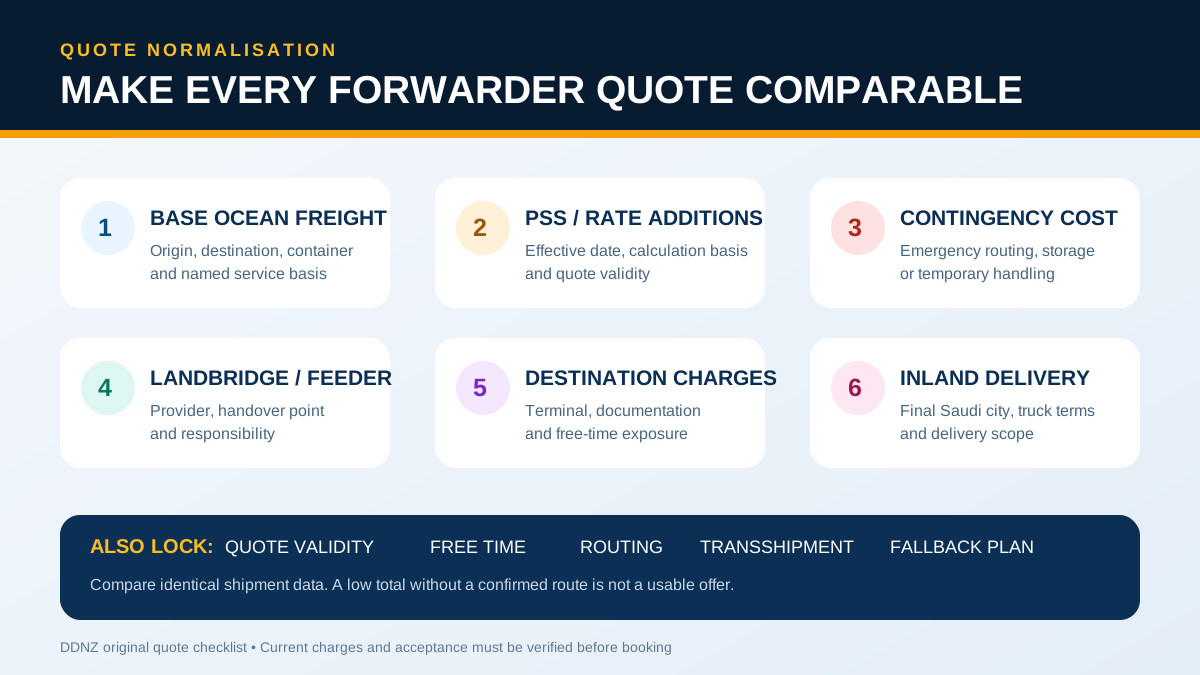
Send the same RFQ sheet to every forwarder. It should state:
- Chinese origin city and intended loading port.
- Saudi final delivery city, not only a preferred seaport.
- Commodity, HS code if known, cargo type and any temperature or dangerous-goods condition.
- Container size, gross weight, volume and cargo-ready date.
- Required service: port-to-port, port-to-door or door-to-door.
- Separate lines for base ocean freight, PSS, emergency/contingency charges, origin fees, landbridge or feeder cost, destination fees and inland delivery.
- Quote validity, free time, routing, transshipment points and what happens if the planned gateway stops accepting the cargo.
- The booking reference or written carrier acceptance needed before the supplier releases cargo.
A lower rate with an unconfirmed gateway can become the most expensive option after rerouting, storage or inland transfer. For Saudi importers, dealers and project contractors, the useful quote is not the shortest number. It is the quote whose route, cargo acceptance, cost lines and contingency responsibility can all be checked.
Request a China–Saudi freight check
Send DDNZ the origin, Saudi delivery city, commodity, cargo type, container size and cargo-ready date. We can structure a comparable freight request and identify the carrier, gateway and cost questions that must be confirmed before booking.
Sources
- Maersk — Increase Peak Season Surcharge, Far East Asia to Saudi Arabia, 23 July 2026
- Maersk — Middle East Operational Update 43, 19 August 2026
- MSC — Resumption of Selected East–West Services in the Red Sea Region, 24 August 2026
- Hapag-Lloyd — Week 34 Middle East Operational Update, updated 17 August 2026